Caring for Leather Gym Equipment: A Guide for Hotels and Premium Fitness Clubs
Develop a practical care plan for leather gym equipment, covering material identification, cleaning approval, drying, inspections and shared-use routines.
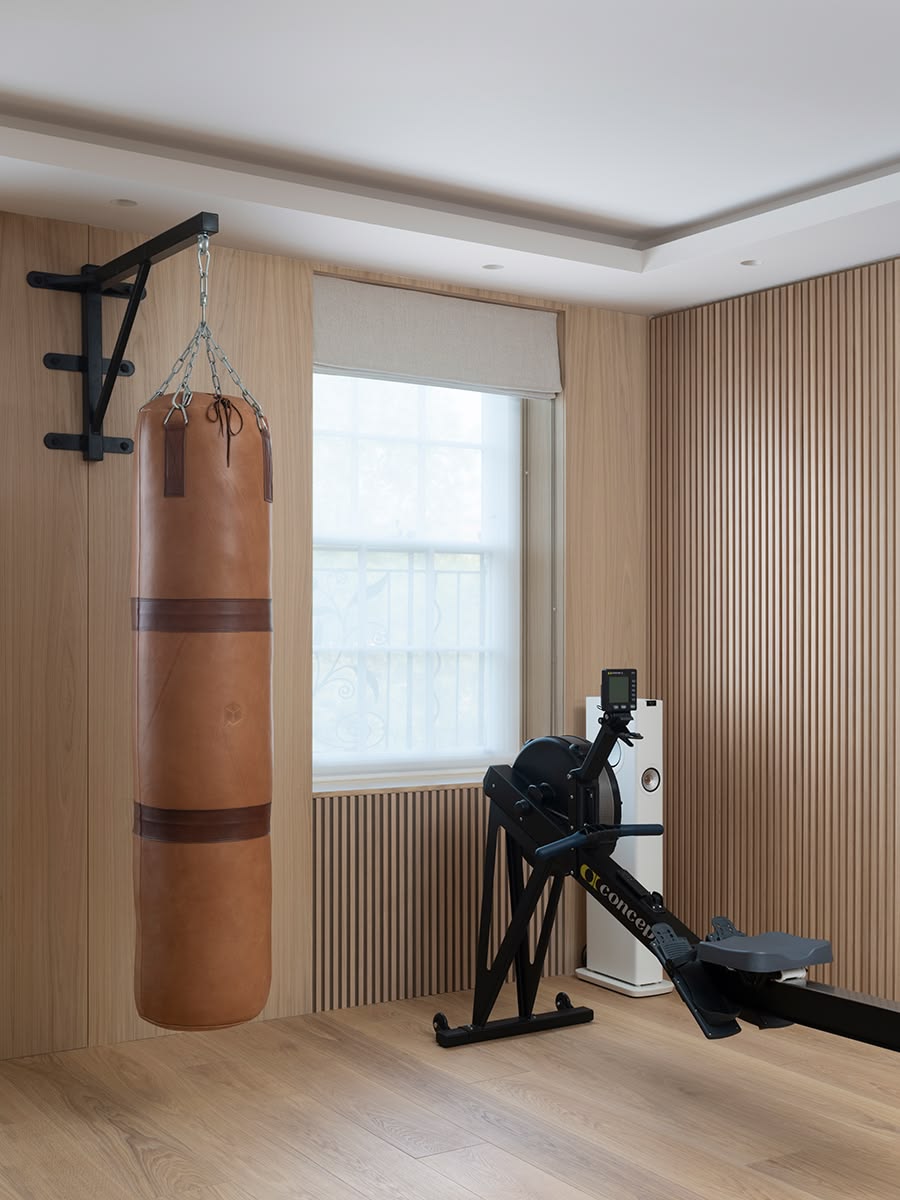
Leather gym equipment needs a care plan matched to the actual leather, finish, construction and intended use. The starting point is written guidance for the commissioned product—not a universal leather-cleaning recipe. For hotels and premium fitness clubs, material care must also work with the venue's hygiene policy, equipment inspection routine and staff handover. The distinction matters because cleaning, disinfection and conditioning serve different purposes. Removing visible marks does not establish that a hygiene requirement has been met, and a product that conditions a hide is not necessarily suitable for disinfecting shared equipment. Resolve those requirements before placing equipment into service.
Identify every material before selecting products
Record the equipment model, leather finish, colour, lining and any additional materials. A boxing glove may combine leather, a textile lining, fasteners and printed artwork. A hanging bag adds straps, fittings and installation hardware. The correct treatment for the outer panel is not automatically suitable for the lining, metalwork or branding. Ask the supplier to confirm the care instructions for the final specification and retain them alongside the purchase record. If an older piece has no identifiable material or finish, seek advice before treating it. A photograph and a generic description such as genuine leather are not enough to choose a chemical cleaning product.
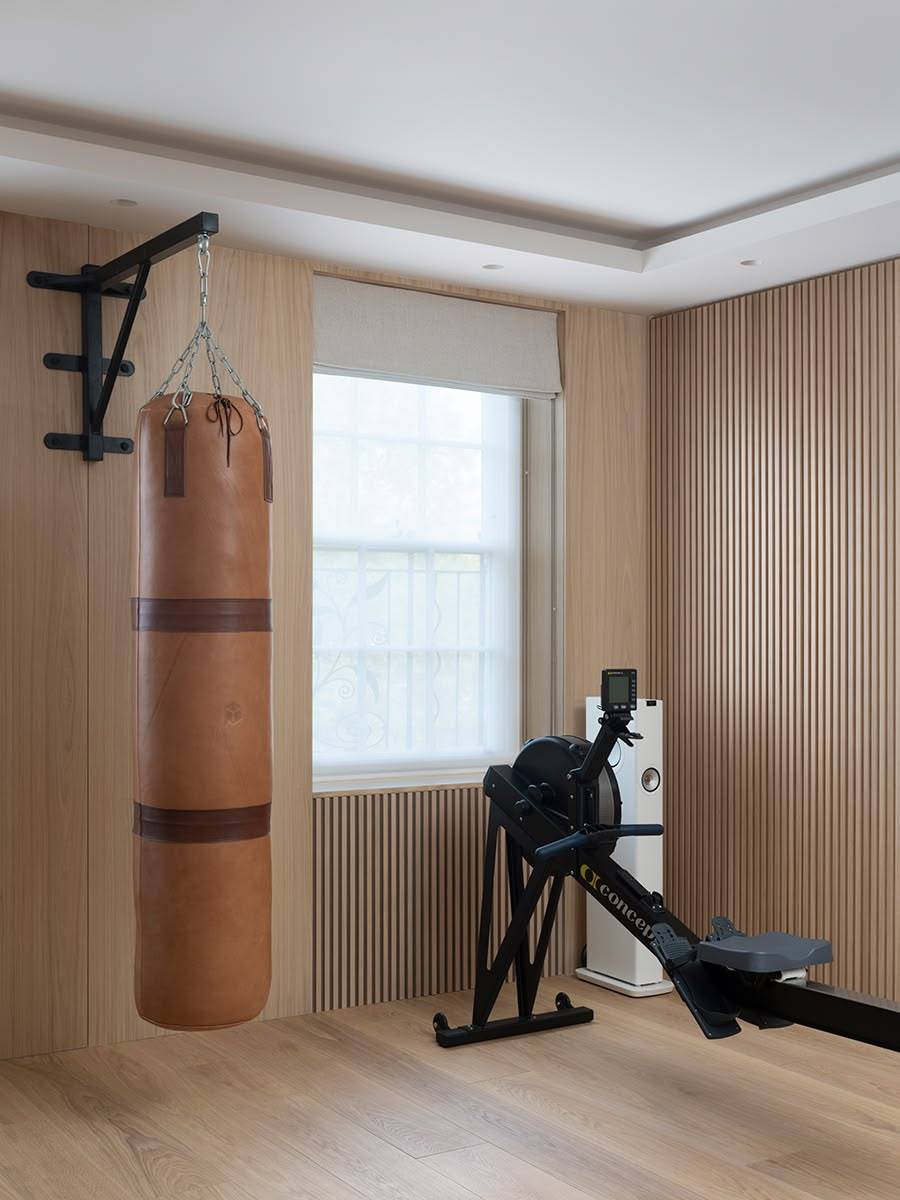
View the Paragon Studio project.
Agree a compatible cleaning and hygiene process
Give the proposed cleaning products and the venue's hygiene requirements to the supplier for review. Discuss the complete process: application method, contact time where required, removal of residue and drying. Do not adopt a disinfectant simply because it works on other gym surfaces. Alcohol, bleach or solvents should not be assumed compatible with a leather finish, adhesive or printed mark. A discreet patch test can help identify a visible reaction, but it does not prove antimicrobial performance or long-term material compatibility. Staff should follow the approved instructions rather than increasing concentration or soaking a product to make cleaning feel more thorough. If the proposed finish cannot tolerate the required hygiene process, that is a design decision to resolve—not an issue to leave to housekeeping.
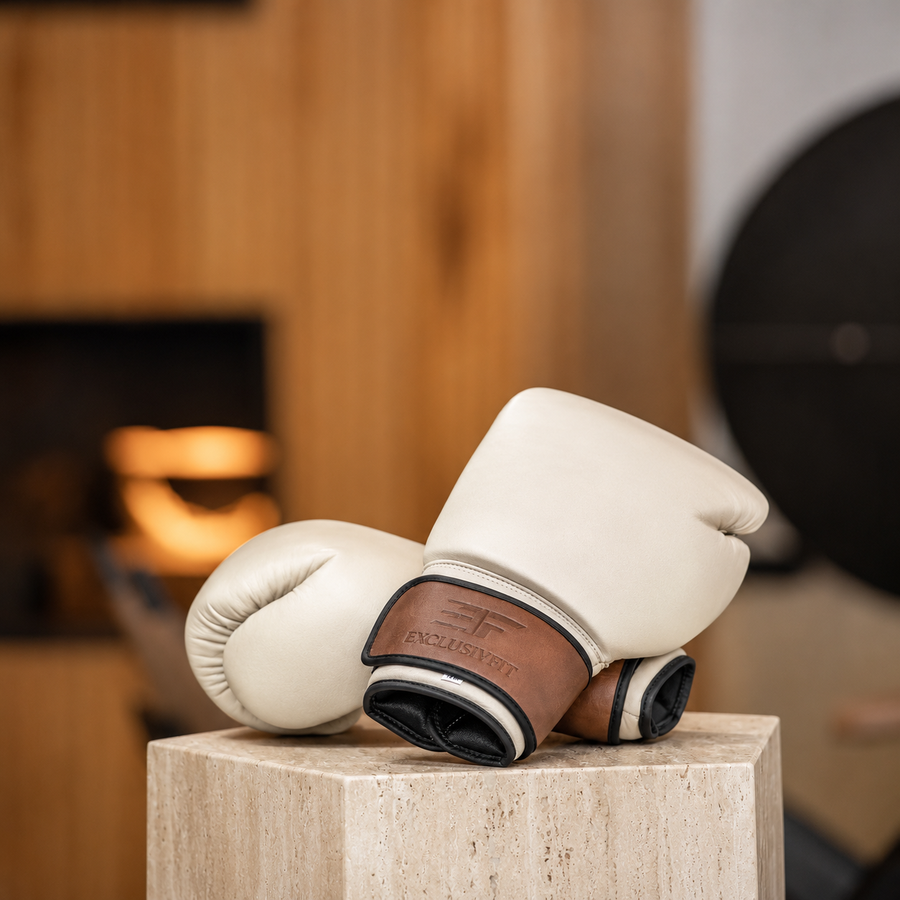
View the Exclusive Fit project.
Make drying and rotation operationally realistic
Moisture management is especially important for enclosed gloves and equipment handled during exercise. Plan a ventilated drying location and enough equipment rotation that items are not returned to storage while damp. Follow the product guidance on drying; do not introduce heaters, tumble drying or direct sun as improvised shortcuts. The Element Wellness Club project shows several equipment formats within a coordinated interior. In a venue with a similar range, the care routine should identify each format separately. A glove lining, a medicine-ball seam and a heavy-bag suspension point are different inspection areas, even when the items share a colour palette and branding.
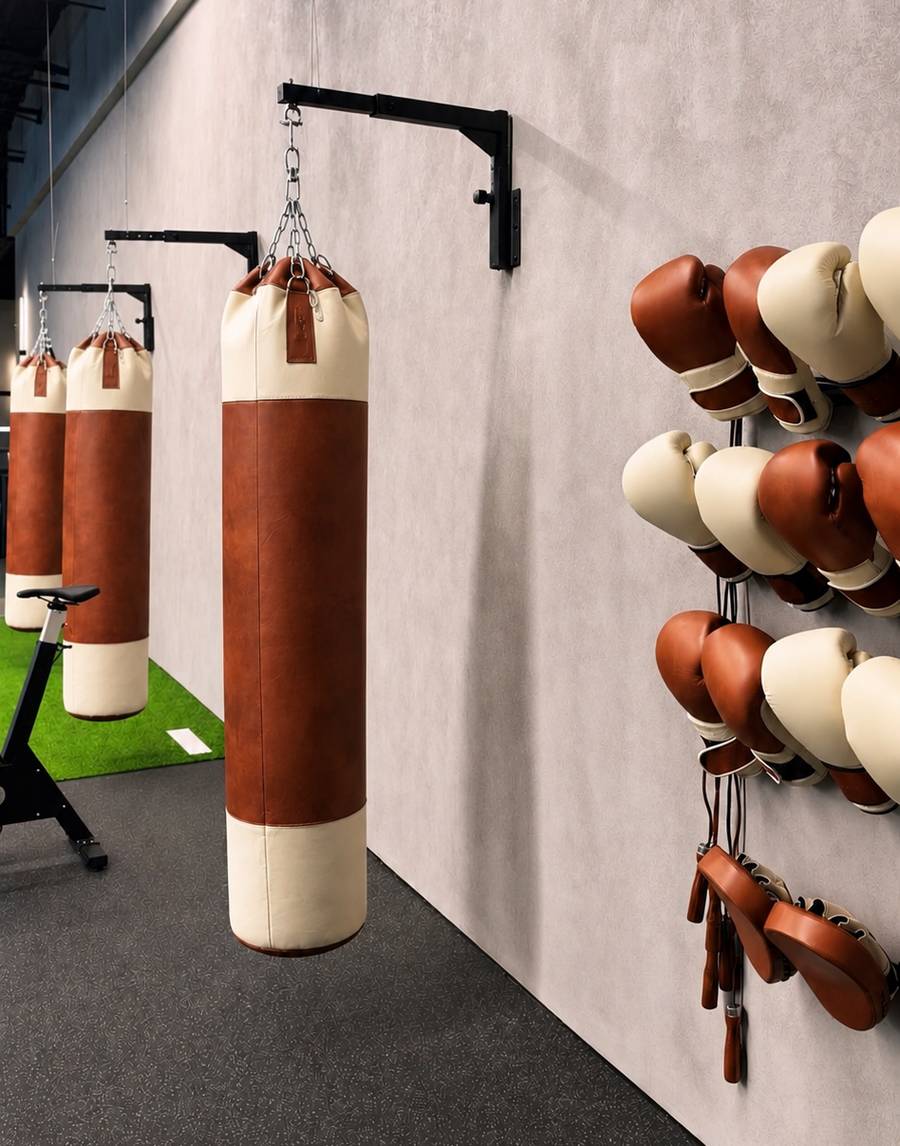
View the Element Wellness Club project.
Inspect construction as well as the surface
Appearance is only part of maintenance. Establish a recorded inspection process appropriate to the product and intensity of use. Include seams, closures, handles, suspension straps and any fittings that are part of the equipment. Ask the supplier or installer what to inspect and what conditions require an item to be taken out of service. Do not cover a torn seam, loose fixing or damaged strap with conditioning product and call the equipment restored. Remove questionable pieces from use pending review. For hanging equipment, structural mounting and associated hardware need appropriate installer guidance; leather-care advice cannot replace an installation or load-safety assessment.
Treat hospitality displays as working equipment when they are used
The Manchester Hotel project offers a real example of leather equipment in a hospitality wellness setting. If display pieces are also offered for training, the hotel needs to account for handling, cleaning and the return of used items. Equipment should not move between a styled shelf and active use without a defined staff check. Keep guest information clear about where equipment may be used and who can assist. A care card for employees can be separate from guest instructions, but both should reflect the same intended use. See our fitness-suite briefing guide when the collection is being planned rather than already installed.
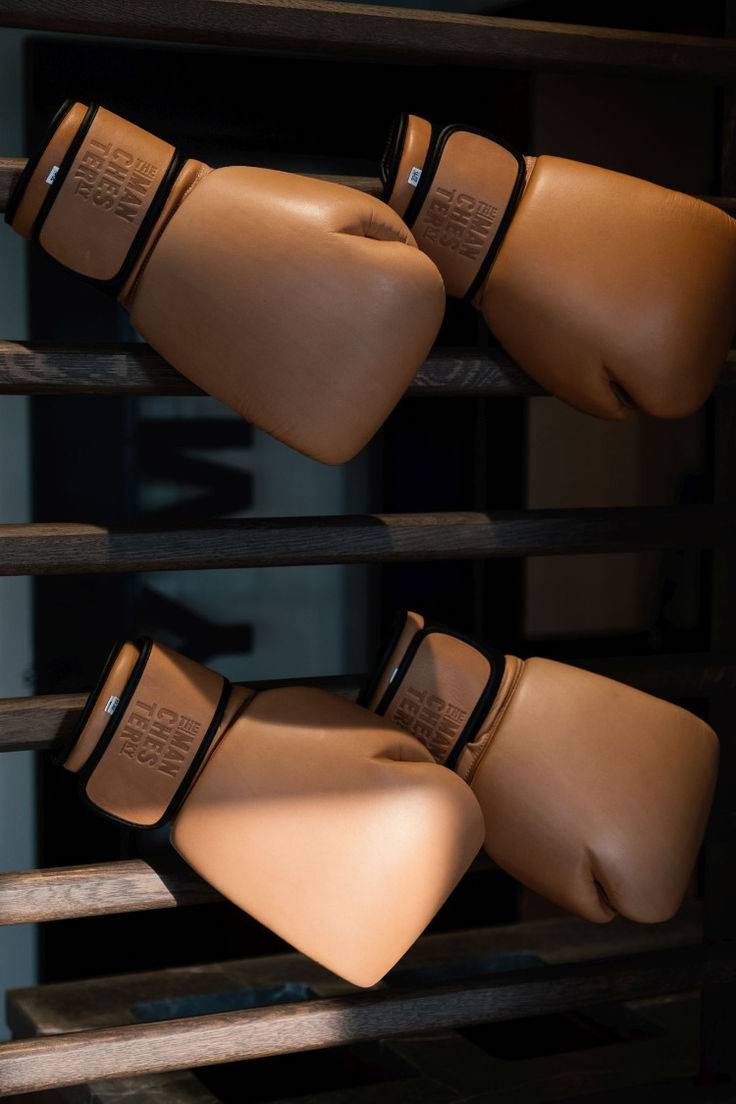
View the Manchester Hotel project.
Do not condition every finish on the same schedule
Conditioning is a material-specific maintenance decision. Confirm whether the finish requires it, which product is compatible and how it should be applied. A fixed calendar taken from unrelated leather goods is not an appropriate substitute for the equipment supplier's guidance. Excess residue or a change in grip can be relevant to use as well as appearance. The same caution applies to repairs and refinishing. Ask whether a replacement strap, lining or component is available and how the repaired piece should be checked before returning to service. Record changes in the equipment log so the next staff member knows what was done and which instructions apply.
Create a simple care record for the venue
The GoodLife Fitness heavy-bag installation is a reference for a dedicated training environment, where inspection and care have to be integrated into daily operations. A useful record identifies the item, its location, the applicable instructions and the person responsible. Record unusual changes rather than relying on a memory of how the equipment looked last week.
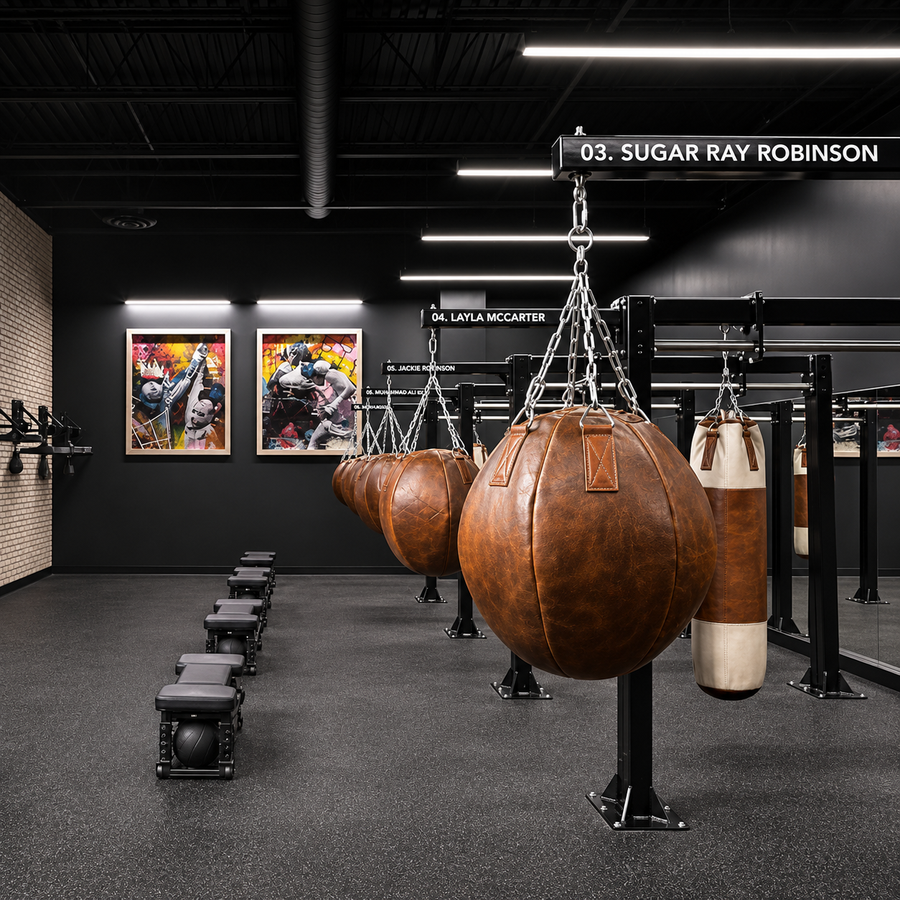
View the GoodLife Fitness project.
- Keep the approved cleaning and care instructions with the product record.
- Identify the cleaning products and method authorised for each material.
- Provide a drying location and a process for rotating shared equipment.
- Define inspection points and an escalation path for damage.
- Record servicing, replacement components and items removed from use.
- Revisit the plan when the venue changes its hygiene products or use pattern.
Can we use ordinary gym wipes on leather equipment?
Do not assume so. Check both material compatibility and whether the complete cleaning process meets your venue's hygiene requirements. The label on a general surface wipe is not product-specific approval for leather, lining or branding.
Does a clean appearance mean equipment is safe to use?
No. Surface appearance cannot confirm the condition of seams, closures, suspension or installation hardware. Care and safety inspections need separate, documented checks appropriate to the commissioned product.
Start your project
Explore our luxury hotels resorts completed work and share a project brief with your organisation, intended use, product direction, indicative quantity, delivery country and target date. MVP Bespoke will review the materials, branding, sample approach and packaging against your particular brief.