Custom Golf Bags for Private Clubs: Materials, Storage, Carrying Style and Crest Placement
Specify a custom golf bag around walking or cart use, club storage, materials, crest placement and sample checks, using completed golf projects.
Custom golf bags should be specified around how members will use them: walking, riding in a cart, travelling or presenting the club identity in a shop or event setting. Materials and crest placement matter, but they should follow the carrying format, storage requirements and practical access. A premium appearance is not a substitute for a bag that works with the user's clubs and routine. This guide is for private-club buyers, golf retailers and tournament organisers developing a bespoke bag. The examples are completed golf projects from the MVP Bespoke portfolio. They show different design directions; they do not establish that every option, mechanism or feature is available on every new commission.
Start with walking or cart use
A walking golfer needs to consider the carried weight, strap arrangement, balance and the way the bag rests when set down. A cart-focused brief needs to consider base fit, securing straps and access to pockets while the bag is attached. These are different priorities, so name the primary use instead of requesting a generic luxury bag. If the bag is intended primarily for display or gifting, say so. That does not remove the need for sound construction, but it changes the importance of carrying comfort, storage and travel protection. Agree which use is essential and which is secondary before discussing a format or asking for a crest mockup.
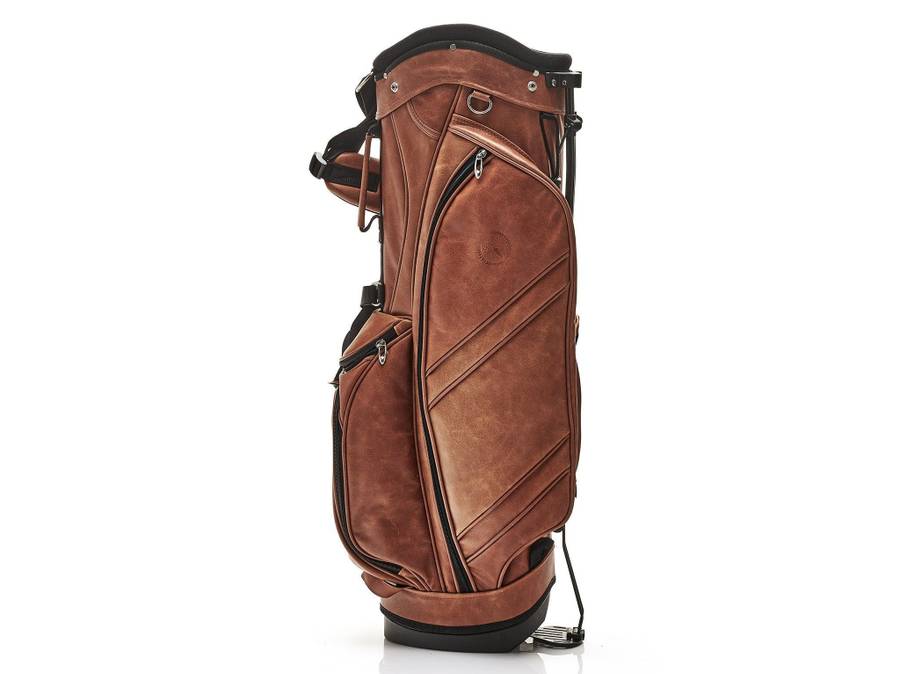
View the Modest Vintage Player project.
Review the proposed format rather than the category name
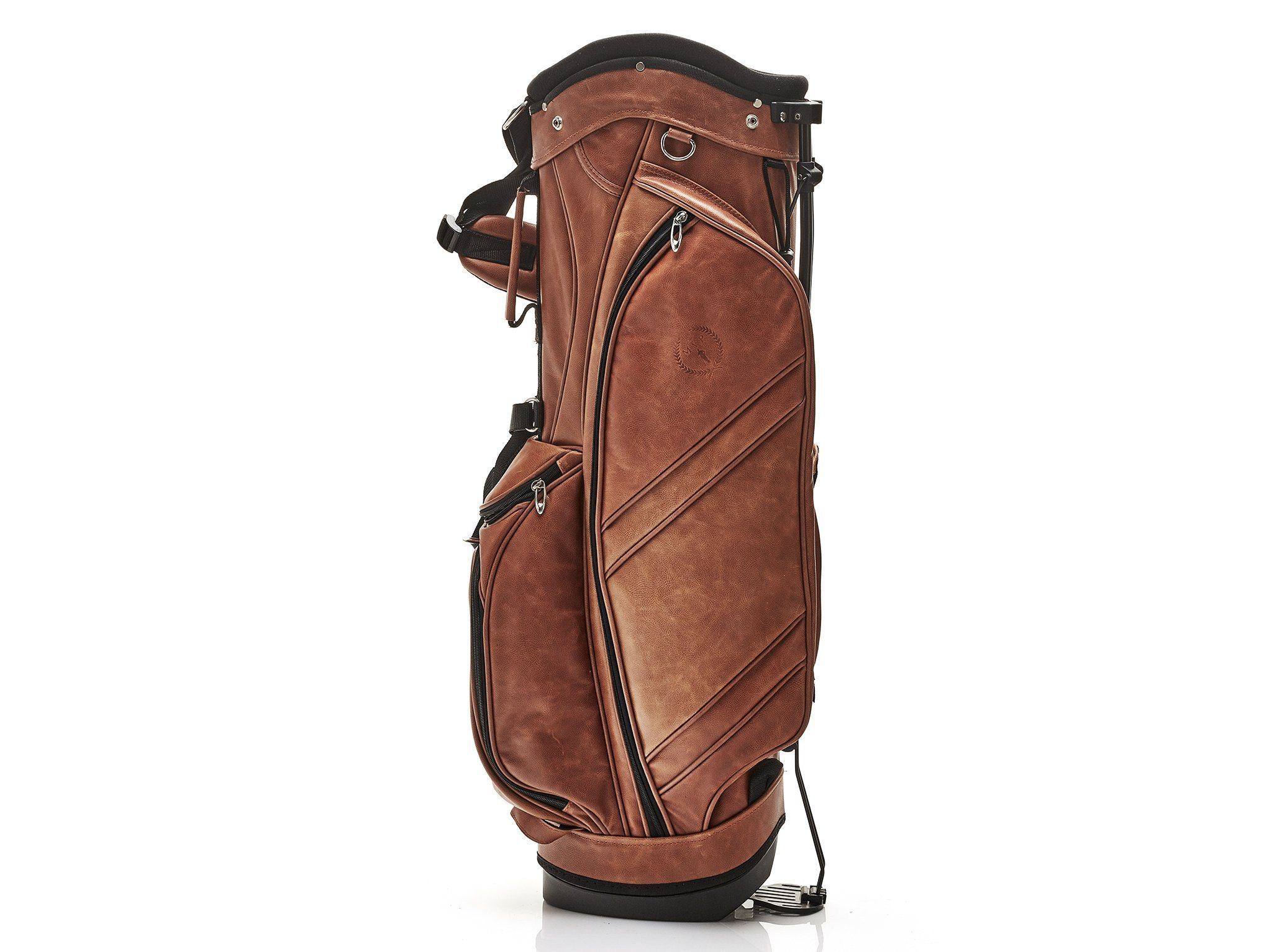
The Modest Vintage Player leather golf bag provides a stand-style reference, while the separate cart project illustrates a more structured direction. Use those examples to explain your preference, then review the actual construction proposed for your club. Product category names alone do not confirm dimensions, divider arrangement, stand hardware or strap systems. Ask for drawings that identify the top opening, base, carrying points and pocket positions. Include the cart or trolley information where fit matters. If a walking design includes stand mechanisms, discuss the specific construction and approval checks with the supplier rather than inferring stability or load performance from a photograph.
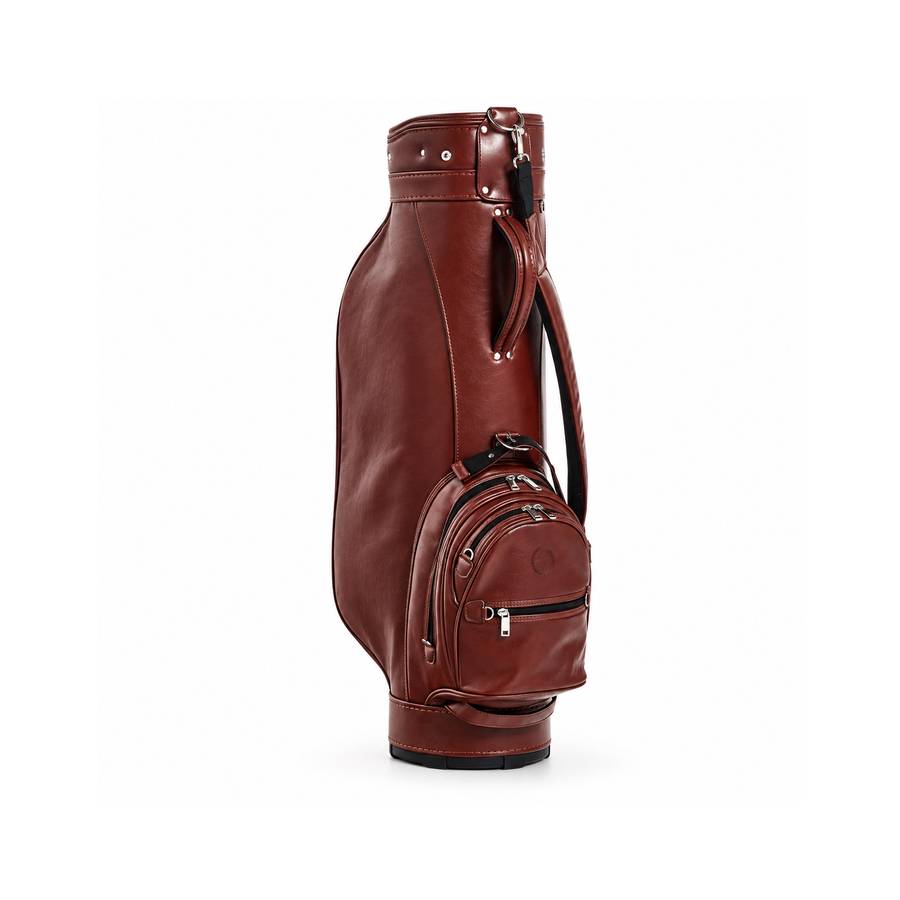
View the Modest Vintage Player project.
Define the storage that members actually need
List the clubs and accessories the bag should accommodate. Confirm the intended club arrangement, divider design, pocket access and any items that need separate protection. A useful brief describes needs in practical terms, such as access to a scorecard holder or space for a layer, rather than adding pockets simply to make the specification longer. Review the bag both empty and in the configuration relevant to its intended use. The dimensions of the finished opening and the usable space inside a pocket are more helpful than an attractive exterior drawing. Where a member range includes different users, identify which configuration is being approved instead of assuming one sample proves every variation.
Choose materials with the carrying brief in mind
Leather, canvas and mixed-material constructions create different visual and handling directions. The navy canvas-and-cream-leather suite below is a real example of combining materials within a coordinated golf collection. The choice should respond to the desired appearance, carried weight, care requirements and the environment in which the bag will be used. Do not assume a canvas or leather description establishes waterproof performance. If weather resistance is a project requirement, state the required result and discuss the relevant construction and evidence. Include lining, reinforcement, contact areas and hardware in the review; the outer material is only one part of the bag.
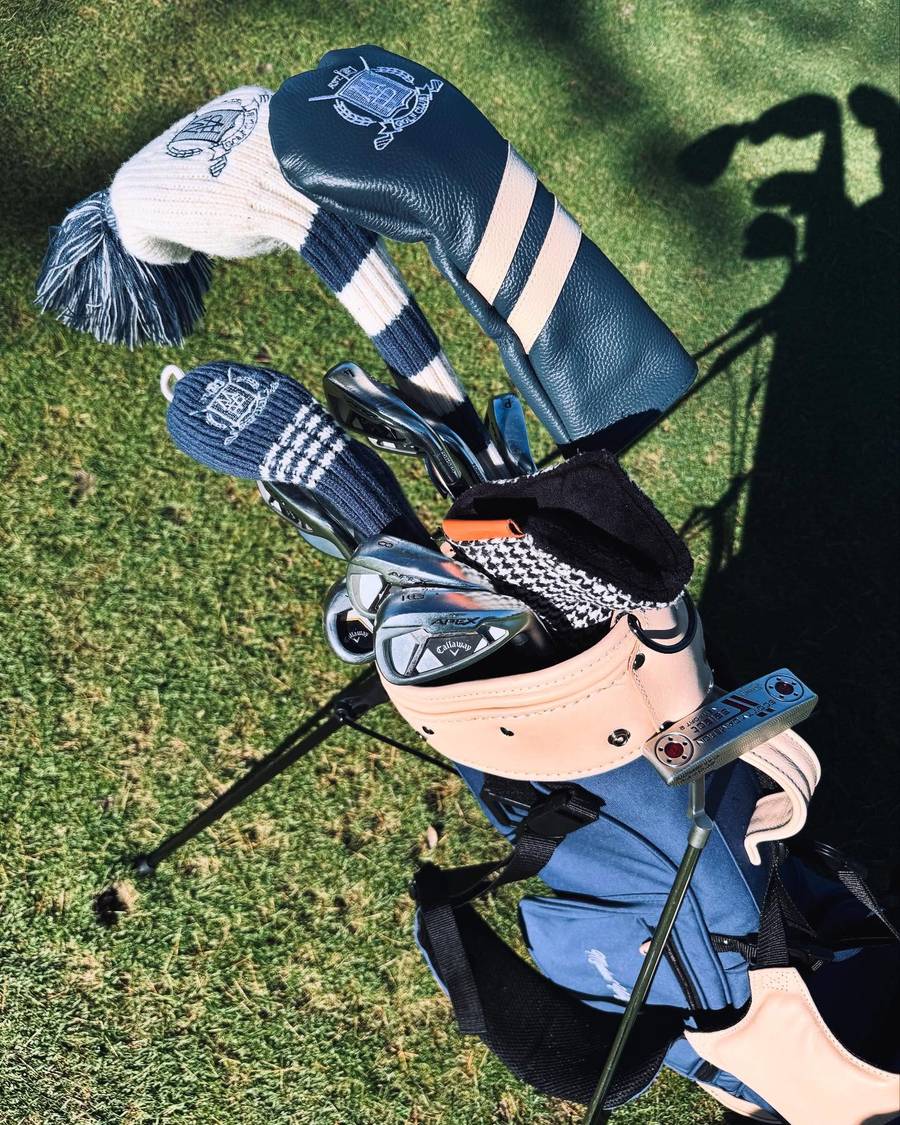
View the Modest Vintage Player project.
Place the crest where it remains visible
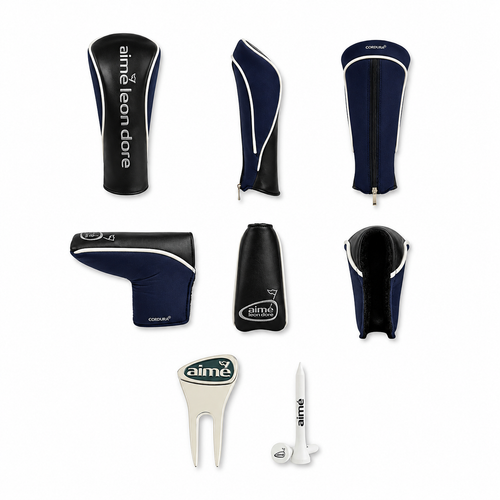
Supply the approved club crest, colour references and rules for clear space or simplified artwork. Then assess placement on the actual bag pattern. A large crest may be obscured by a cart strap, distorted across a curved panel or hidden behind a carrying system. Review the bag from the positions in which members, staff and shop customers will see it. The Aimé Leon Dore SS25 collection provides a reference for brand-led golf accessories and restrained bag branding. For a club commission, consider a primary crest, discreet secondary details and any personalisation as separate decisions. Confirm spelling and artwork versions before sampling. Our embossing and debossing guide explains the material-branding questions in more detail.
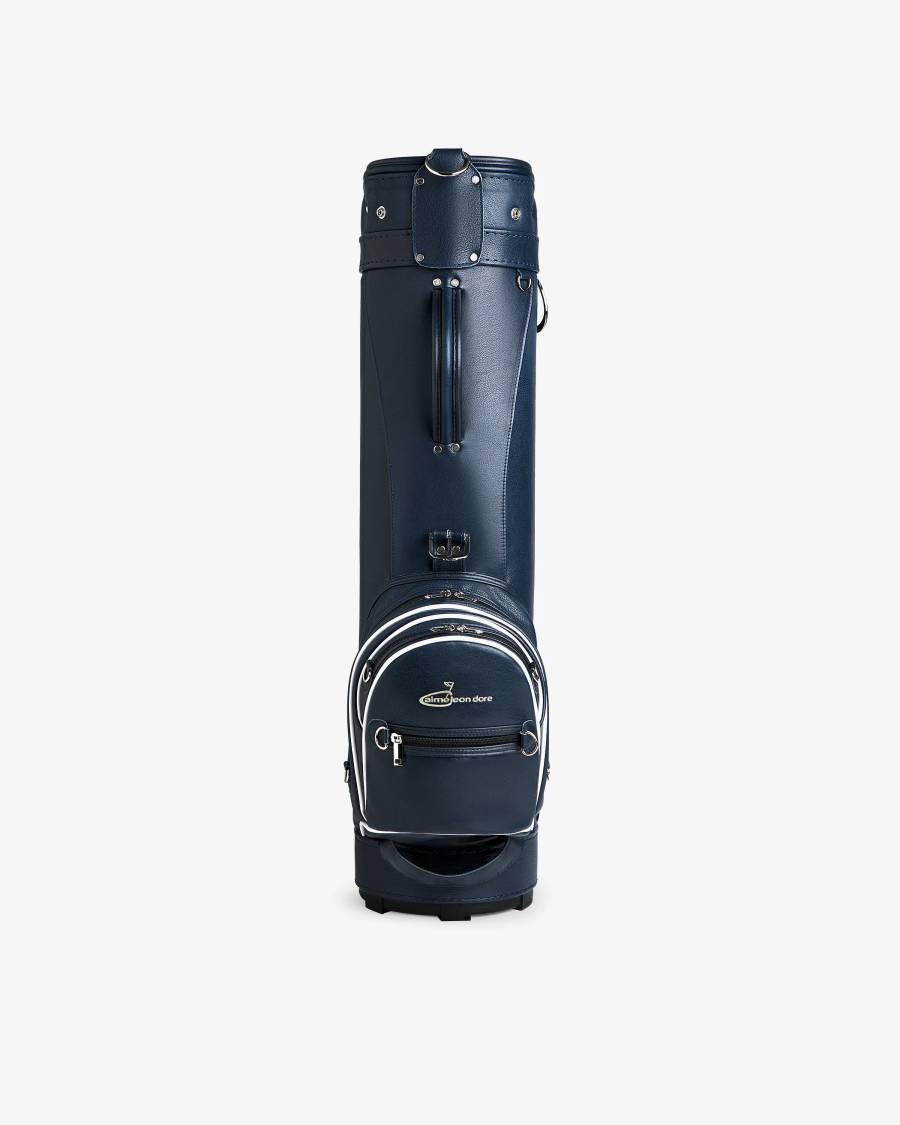
View the Aime Leon Dore project.
Approve construction and identity together
A representative sample should be checked against the written specification, not only against a design image. Review seams, handles, straps, closures, pocket access and the accepted branding result. Confirm any tolerances or testing requirements for the proposed format with the supplier. Record substitutions openly if the sample differs from the intended production materials. The Modest Vintage Player canvas-and-leather production photograph below is a construction reference, not proof that a new club's bags have been approved or produced. It is a reminder that a finished range involves repeated details. Keep the accepted specification and artwork version together so repeat decisions do not rely on an old photograph alone.
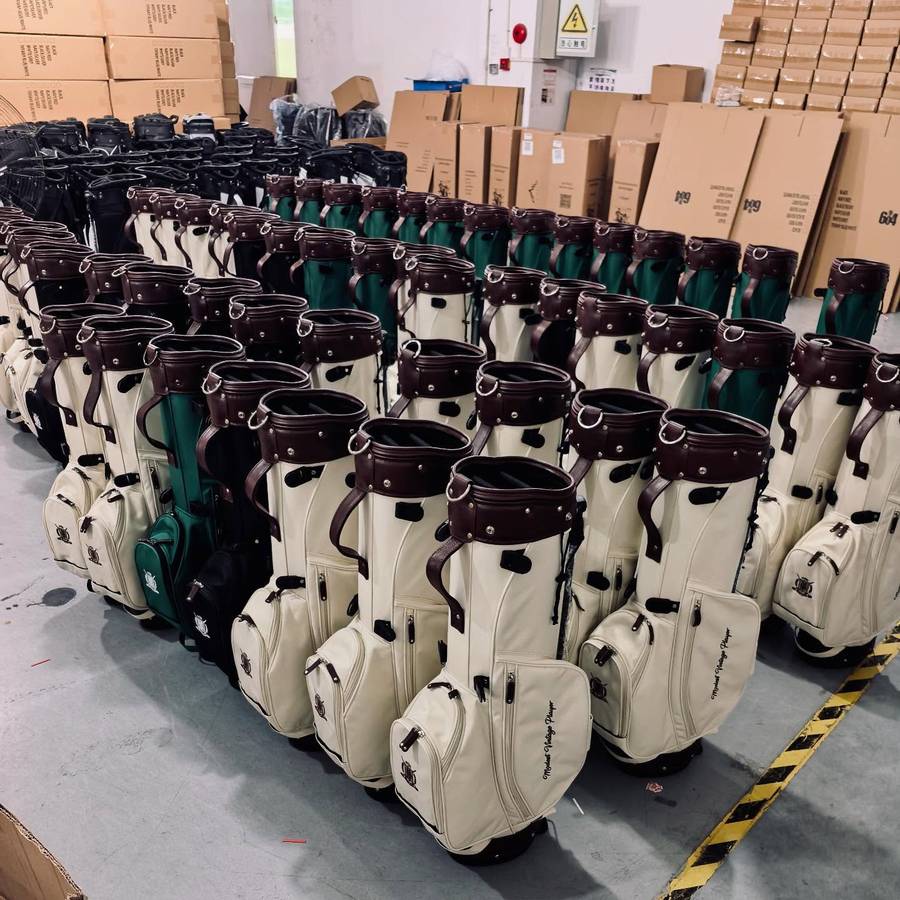
View the Modest Vintage Player project.
Consider the wider club collection
A bag can coordinate with gloves, headcovers and scorecard accessories, but each product needs its own functional brief. Match the palette and identity without requiring the same construction or mark size on every surface. Read our headcover material comparison when deciding which complementary pieces belong in a member collection.
- Identify walking, cart, travel or presentation as the primary purpose.
- Confirm club storage, useful pockets and access when attached to a cart.
- Supply crest artwork, palette and personalisation requirements.
- Review materials, carried weight, care and weather-related requirements.
- Agree the representative sample, acceptance checks and packaging.
Can one bag design serve every member?
A single format may suit a particular programme, but golfers' carrying and storage needs differ. Identify the intended user group and use pattern before deciding whether one configuration is appropriate.
Can we reorder the same club bag later?
Discuss the previous specification and current availability with MVP Bespoke. Retaining the approved sample details, artwork and materials makes the review clearer, but repeat production should not be assumed unchanged without confirmation.
Start your project
Explore our golf private clubs completed work and share a project brief with your organisation, intended use, product direction, indicative quantity, delivery country and target date. MVP Bespoke will review the materials, branding, sample approach and packaging against your particular brief.