Visual Merchandising for Premium Sporting Goods: Displaying Leather Balls, Gloves and Bags
Plan a premium sporting-goods display with product groupings, clear intended-use information, tactile access, stable presentation and material care.
Visual merchandising for premium sporting goods should make the product, its purpose and its material character easy to understand. Leather balls, gloves and bags can share a display, but they do not all need the same support, handling arrangement or product information. A considered layout gives each object a clear role rather than treating sporting equipment as interchangeable decoration. The photographs below are completed product and editorial references from MVP Bespoke projects. They are not claims that the pictured arrangements were installed in the named retailers' stores. Use them to develop a display brief with your merchandising team, then review the actual fixtures and customer experience.
Decide what the display needs to communicate
Identify whether the display introduces a new collection, supports a seasonal story or explains one product category. A focused narrative is easier to execute than a display that attempts to show every sporting silhouette at once. Choose a principal object and supporting pieces that make the collection relationship clear. Also identify the intended use of each product. Customers should not need to guess whether a leather ball is a collectible, a decorative object or equipment specified for play. A short, accurate product description can prevent an attractive heritage appearance from implying performance features that have not been verified.
Use grouping to reveal a collection, not hide individual products
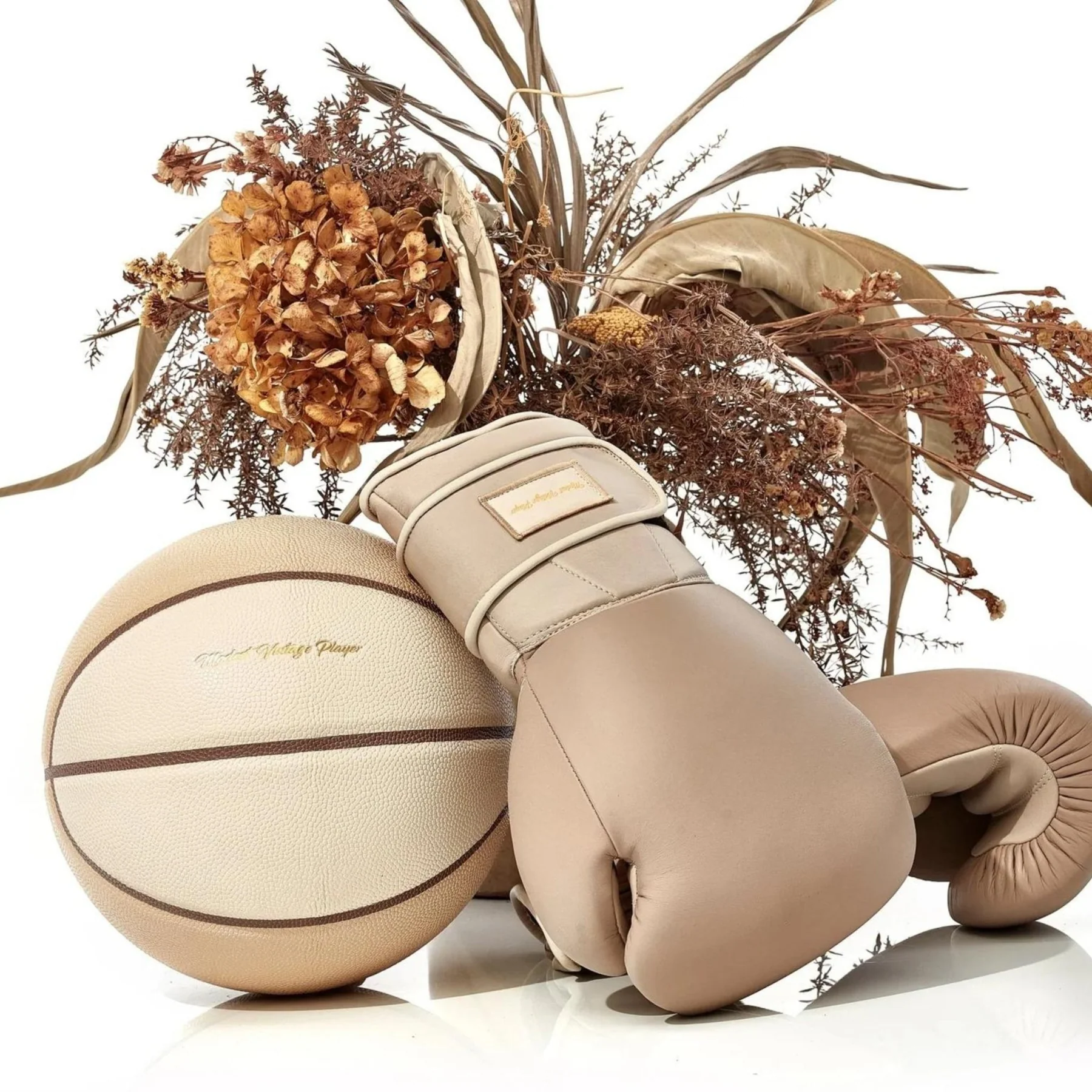
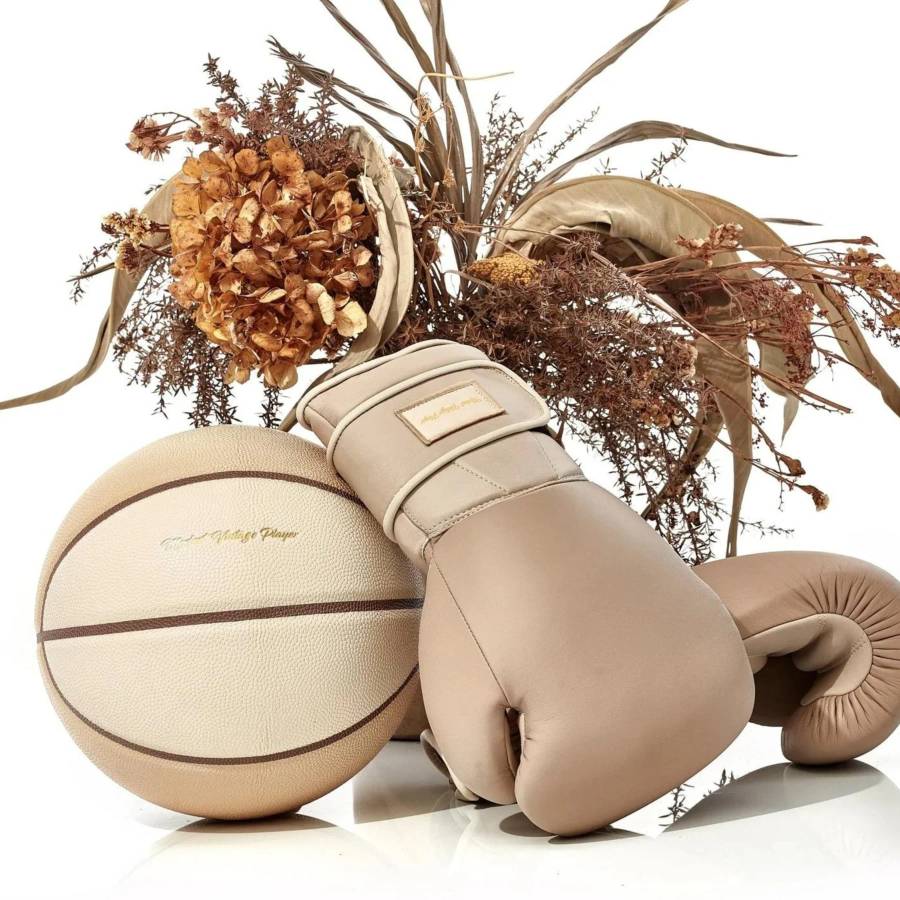
The SSENSE basketball-and-glove styling offers an editorial reference for pairing different sporting objects. A retail interpretation should preserve enough space for customers to inspect the shape and material of each piece. Flowers or other styling elements must not obscure the product information or make handling awkward. Consider colour, proportion and use when grouping products. Repetition can create rhythm, but it should not make distinct formats look like one unlabelled set. If items are sold separately, keep that distinction clear. Where a collection is sold together, show what is included and how the pieces relate without inventing a bundle that the retailer has not agreed.
Give rounded objects stable, product-appropriate support
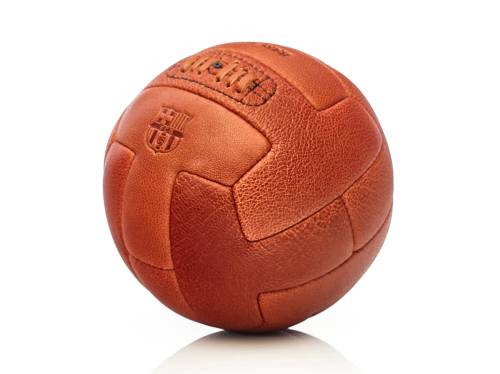
A soccer ball needs an arrangement that prevents unwanted movement while allowing its key design to be seen. Review the proposed support with the actual finished product, including contact points and whether the surface can be marked. Do not improvise restraint that compresses a seam or rubs printed artwork. The Zara Home leather soccer ball provides a single-product reference with a clear panel pattern. Decide which orientation reveals its identity, then ensure that customers can understand the rest of the object through handling, another view or product imagery. A good display should not conceal practical details simply to achieve a perfect photograph.

Show bags in a way that explains their format
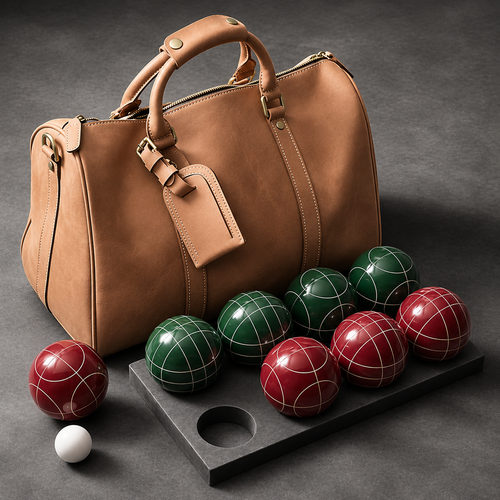
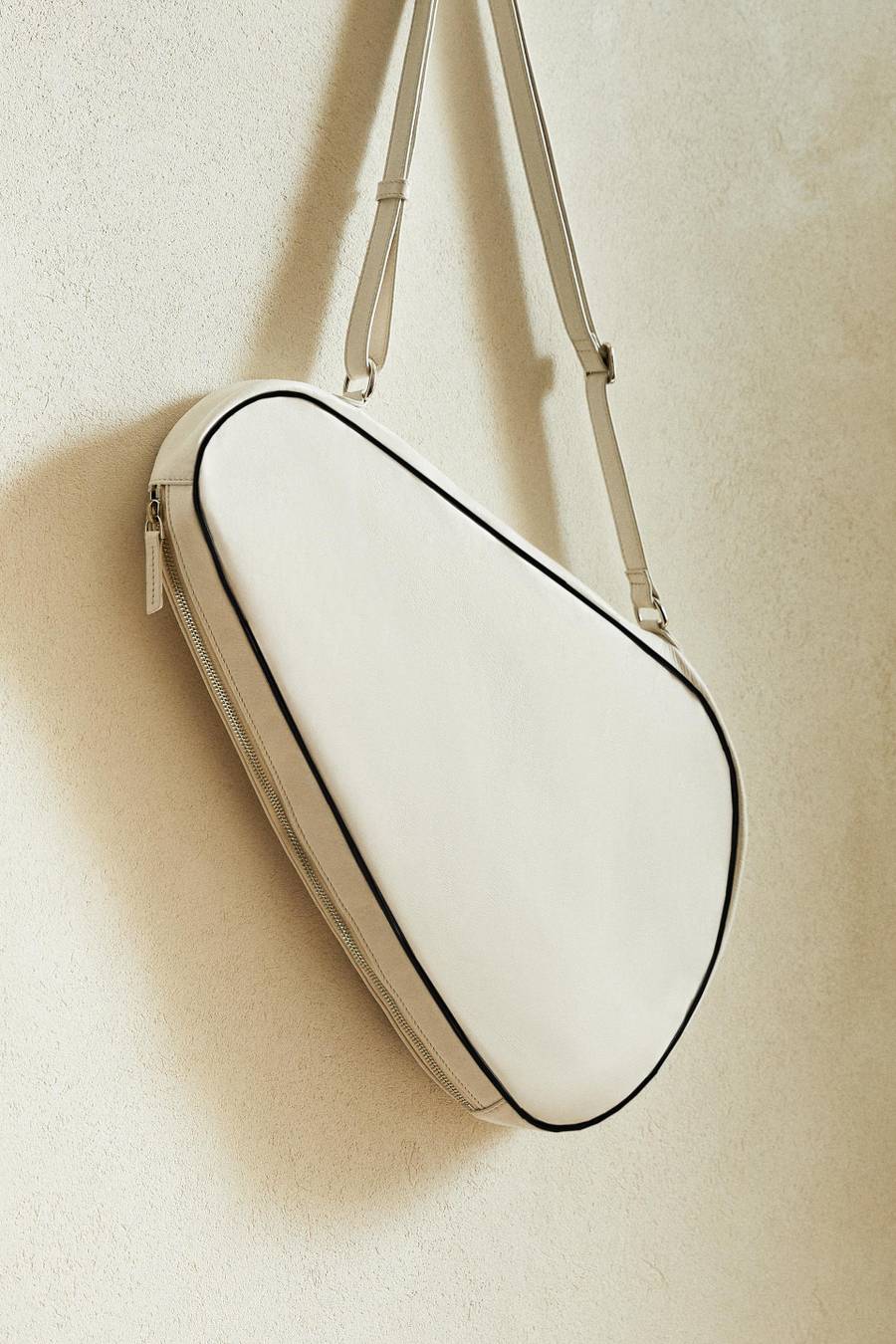
A bag can be presented upright, hanging or resting on a surface, but the fixture should suit its construction and weight. Confirm the appropriate support rather than suspending it from a point that was not intended for repeated display loading. Review how the bag behaves empty and in the agreed presentation configuration. The Zara Home padel carry bag is a reference for a specialised sporting silhouette. Customers may need to see access, carrying details and scale to understand it. Do not infer capacity from the exterior alone. Use the agreed product specification to write information about what the bag is intended to hold.
Balance tactile access with material care
Premium materials invite inspection. Decide which pieces customers may handle, how staff will return them to the display and whether a dedicated sample should be used. Repeated handling can affect presentation, so plan checks and care rather than keeping every product inaccessible behind styling. Review lighting and material exposure with the appropriate suppliers. Avoid assuming that a finish is unaffected by heat, sunlight or contact with a fixture. Cleaning instructions should be matched to the actual product, and staff should not apply a generic display-surface cleaner to leather goods without confirming compatibility.
Keep collection stories accurate
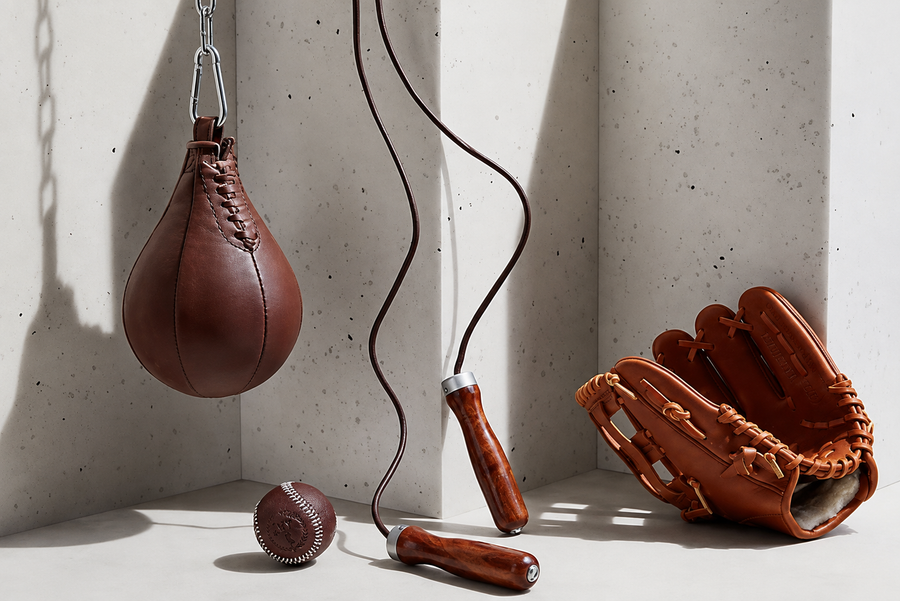
The CB2 holiday collection demonstrates a coordinated sporting direction across different formats. A new retailer's display can use a similar grouping principle while retaining its own approved identity and accurate product information. It should not claim the CB2 collaboration as its own or imply that products shown separately are automatically available as a combined set. Use the story of the commissioned materials, brand direction and object selection where those facts are documented. Avoid unverified claims about local manufacture, historic provenance, certifications or customer outcomes. An honest product story is more useful to a buyer than a generic luxury description attached to every item.
Make small objects readable without clutter
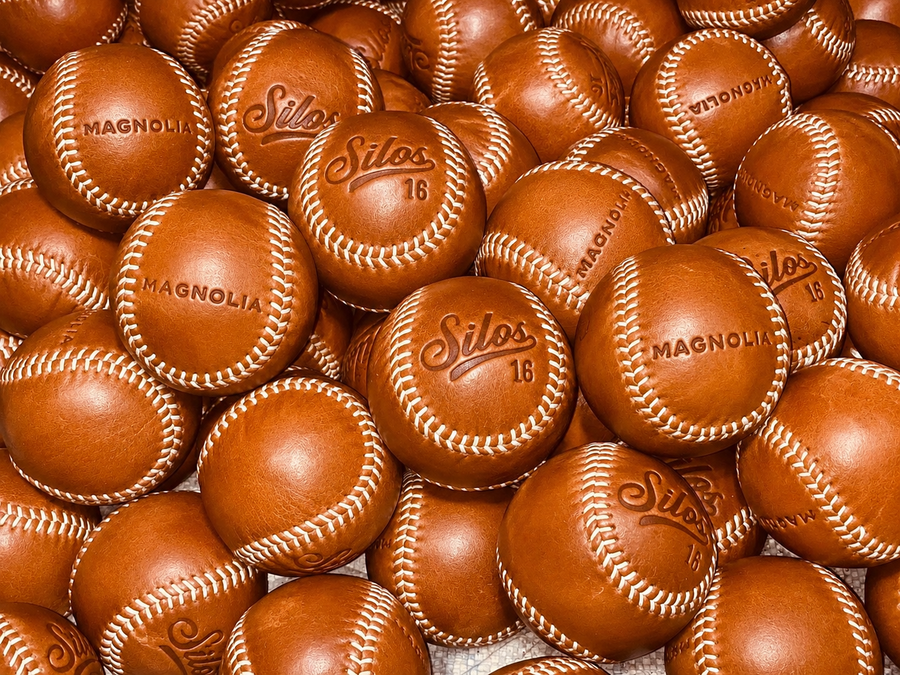
The Magnolia baseball project shows a compact product whose seams and material deserve close inspection. Small objects can be lost in a large display, so use scale, spacing and a suitable supporting surface to make them visible. Keep labels close enough that customers can identify which information belongs to which piece. If a product has variants, show the distinction clearly and explain how customers can review the others. Avoid crowding every colour into the same space. The display and the store's product imagery should use consistent naming, intended-use information and material descriptions.
Review the display with store operations
Walk through replenishment, customer handling, cleaning and the return of display samples. Identify who checks that fixtures remain stable and that the correct information stays beside the product. A layout that looks composed on launch day still needs to work when products are moved, sold or replaced. For range development, see our private-label versus wholesale guide. Merchandising follows the agreed product range; it should not conceal gaps in the specification or promise options that have not been confirmed.
- Define the collection story and the principal product.
- State the intended use of each sporting piece accurately.
- Review supports, contact materials and fixture stability.
- Plan customer handling, cleaning and sample replacement.
- Keep labels, product imagery and store information consistent.
Can leather sporting goods be displayed as decorative objects?
Yes, where that presentation reflects the agreed product purpose. Keep the description clear and do not imply match or training suitability from the display alone.
Should every display use a complete sporting set?
No. A single well-presented object can communicate a collection direction more clearly than an overcrowded arrangement. Choose supporting pieces only when they help the customer understand the range.
Start your project
Explore our premium retailers completed work and share a project brief with your organisation, intended use, product direction, indicative quantity, delivery country and target date. MVP Bespoke will review the materials, branding, sample approach and packaging against your particular brief.